
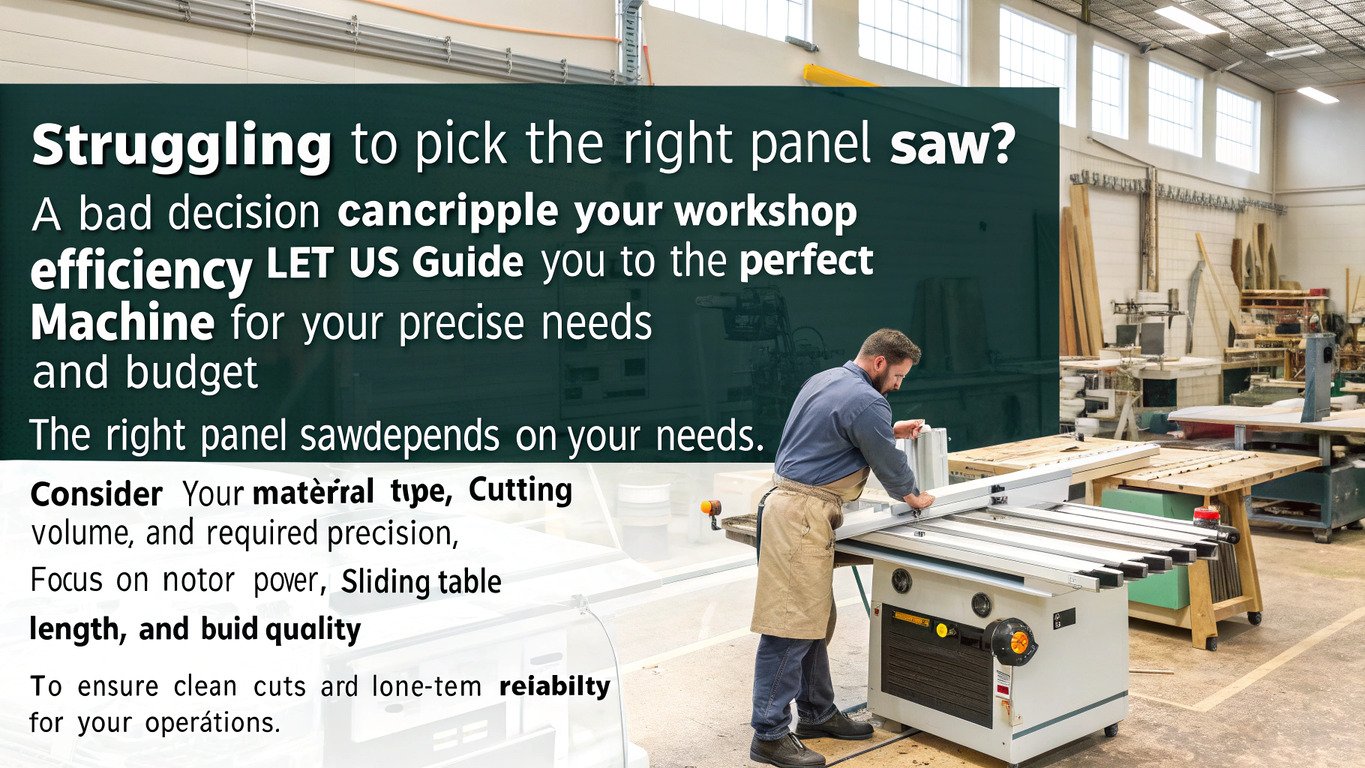
Struggling to pick the right panel saw1? A bad decision can cripple your workshop's efficiency. Let us guide you to the perfect machine for your precise needs and budget.
The right panel saw depends on your needs. Consider your material type, cutting volume, and required precision. Focus on motor power2, sliding table length3, and build quality4 to ensure clean cuts and long-term reliability for your operations.
I've been in the woodworking machinery business for over two decades. In that time, I've spoken with hundreds of purchasing managers, just like you. The story is often the same. They are under pressure to find a machine that not only performs well but also provides real value for the company. A panel saw is a significant investment. Making the wrong choice leads to production bottlenecks5, poor finishing, and wasted materials. It's a headache no one needs. That's why I want to break this down for you. We will go through the essential steps to ensure your next panel saw is an asset, not a liability. Let’s get you the information you need to make a confident decision.
What Key Features Define a High-Quality Panel Saw?
Feeling lost in a sea of technical specs? You see terms like scoring blades6 and rip capacity7, but it's hard to know what really impacts your daily work.
A high-quality panel saw is defined by its powerful and reliable motor, a precise sliding table, a dedicated scoring blade for chip-free cuts8, and a robust frame that minimizes vibration. These features work together to guarantee accuracy and durability.
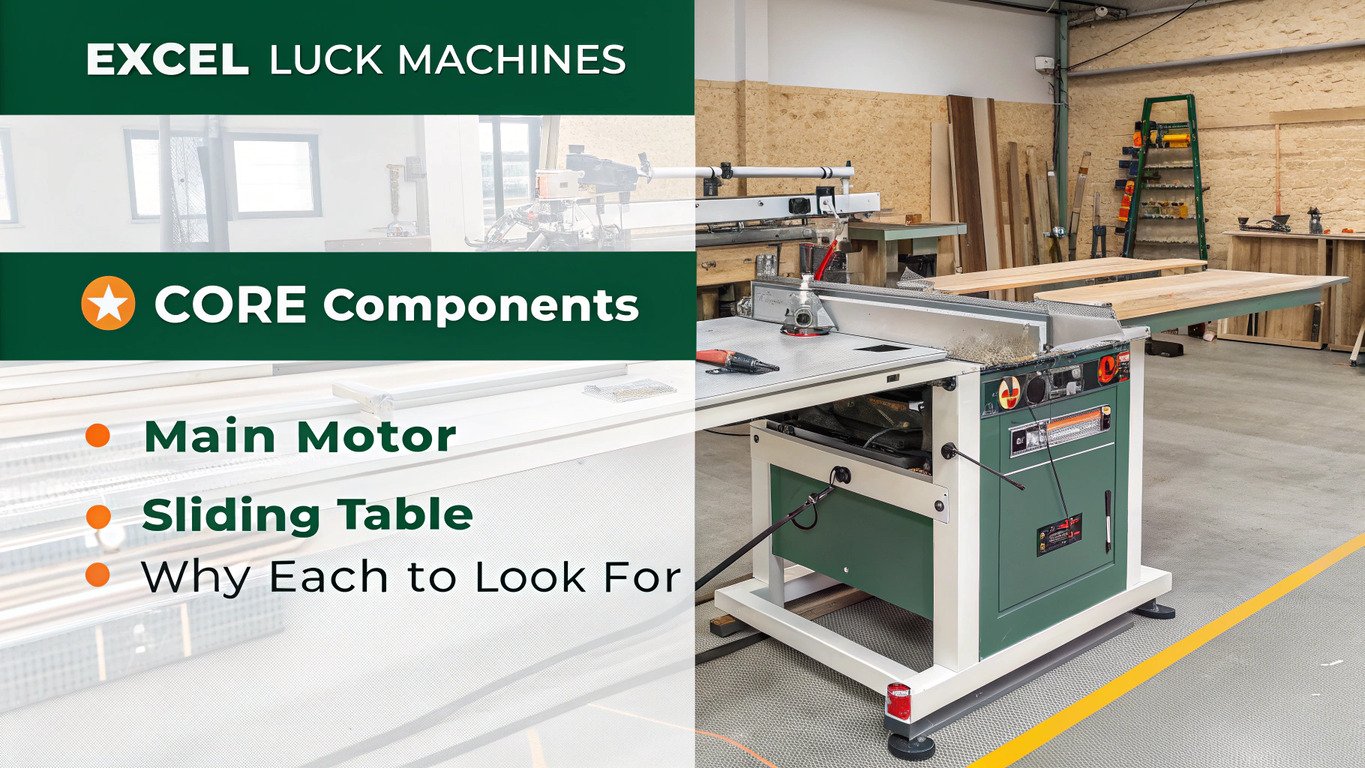
When you are comparing different panel saws, the details make all the difference. I always tell my clients to start with the core components. Think of it as checking the engine of a car before you look at the paint color. These components determine the machine's performance and lifespan. We build our EXCEL LUCK machines with this philosophy in mind, focusing on robust engineering that you can rely on day after day.
Core Components to Scrutinize
Let's break down the most critical features. Each one plays a vital role in the final quality of your cut.
| Feature | Why It's Important | What to Look For |
|---|---|---|
| Main Motor | Provides the power to cut through dense materials without slowing down or burning the wood. | A motor of at least 5 HP (or 4 kW) for general use. For heavy-duty industrial use9, look for 7.5 HP (5.5 kW) or more. |
| Sliding Table | This is where the precision comes from. It must be smooth, stable, and perfectly aligned to ensure straight, accurate cuts over its full length. | Anodized aluminum construction for durability. Check for a smooth, frictionless glide. The length should match the largest panels you regularly cut. |
| Scoring Unit | This small blade spins in the opposite direction of the main blade. It cuts the bottom surface of the panel first, preventing chipping and tear-out. | A separate motor for the scoring unit provides more power and reliability. Look for easy-to-adjust scoring blades6 for different material thicknesses. |
| Rip Fence | The fence guides the material for rip cuts. It needs to be rigid, easy to adjust, and lock securely in place for repeatable accuracy. | A heavy-duty fence with a micro-adjustment feature10 is ideal. Check that it locks down firmly without any movement. |
Understanding these features helps you move beyond the sales pitch and evaluate a machine based on its true capabilities.
Should You Choose a Sliding or Vertical Panel Saw?
Your workshop space is limited, but your production demands are high. You need a saw that can handle large sheets efficiently without taking over the entire floor.
Choose a sliding panel saw for ultimate precision and versatility with various cuts. Opt for a vertical panel saw11 if your primary need is breaking down large sheets in a workshop with limited floor space. It offers a smaller footprint12.
I remember a client from a small but busy cabinet shop in Germany. He was struggling with this exact question. His team was manually cutting large MDF sheets on a small table saw, which was slow, inaccurate, and unsafe. He needed an upgrade but was worried about space. This is a common problem for many workshops. Both sliding and vertical panel saws can handle large sheets, but they are designed for different workflows and environments. The right choice depends entirely on your specific operational needs and the physical layout of your facility. Let's look at the pros and cons of each to make this choice clearer.
A Head-to-Head Comparison
The best way to decide is to compare them directly based on the factors that matter most to a purchasing manager: space, precision, and versatility.
| Factor | Sliding Panel Saw | Vertical Panel Saw |
|---|---|---|
| Footprint | Requires a large footprint12, especially for the sliding table's travel path. You need significant space on the left side and behind the machine. | Very space-efficient. It has a small floor footprint because it stands upright against a wall. |
| Precision | Offers exceptional precision for rip cuts, cross cuts, and angled cuts. The sliding table provides superior support and accuracy. | Good for breaking down large sheets into smaller, manageable sizes. It is generally less precise for fine, finished cuts. |
| Versatility | Highly versatile. Excellent for a wide range of cuts, including miters and bevels. Ideal for furniture and custom cabinetry manufacturing. | Less versatile. Its primary function is making straight vertical and horizontal cuts on large panels. Not suitable for angled cuts. |
| Workflow | One operator can easily and safely handle a large sheet. The material is stationary on the sliding table, which moves past the blade. | Requires the operator to move the saw carriage across the stationary panel, which can be more physically demanding for some tasks. |
For that German client, we recommended a compact sliding panel saw. Even though it took up more space than a vertical saw, its precision and versatility were essential for his cabinet business. It ended up increasing his team's efficiency by over 50%.
How Does the Manufacturer's Reliability Impact Your Purchase?
You found a panel saw that looks good on paper, but how can you trust it will last? A machine failure could halt your production line and lead to costly delays.
The manufacturer's reliability is your best insurance. A proven track record, strict quality control like ISO 900113, and comprehensive testing ensure your machine performs consistently, minimizing downtime and protecting your investment14 for years to come.
A few years ago, a purchasing manager for a large furniture brand in North America told me about a nightmare experience. He had bought several machines from a new, low-cost supplier. Within six months, two of them had critical motor failures. The supplier was unresponsive, and he had to spend a fortune on emergency repairs. This story is a powerful reminder that the machine is only as good as the company that builds it. At EXCEL LUCK, our 26 years of experience have taught us that quality is non-negotiable. That’s why every single machine we produce undergoes a full-function test before it leaves our factory. We don't just check if it turns on; we run lifetime tests, drop tests, and temperature tests to simulate years of hard work.
Vetting a Manufacturer: A Checklist
Before you sign a purchase order, you need to vet the manufacturer. Their processes are a direct indicator of the quality you can expect. Here’s what to look for.
- Certifications: Do their products have certifications relevant to your market, like CE for Europe or ETL for North America? This proves compliance with safety and quality standards.
- Quality Control System: Ask about their quality control process. Do they follow a recognized system like ISO 9001? This ensures a consistent and documented approach to quality at every stage of production.
- Testing Procedures: What kind of testing do they perform? Reputable manufacturers conduct extensive testing. For example, at EXCEL LUCK, we use the ISO 2859 standard for sample inspections in addition to testing every unit.
- Experience and Specialization: How long have they been in business? Do they specialize in woodworking machinery? A company with decades of OEM/ODM experience15 for global brands has proven its ability to meet high standards.
- One-Stop Solution: Can they support you from design to production? A manufacturer that offers customized solutions16 can better meet your specific market needs, providing a true partnership rather than just a transaction.
Choosing a reliable manufacturer like EXCEL LUCK de-risks your investment and ensures you get a machine built to last.
Conclusion
Choosing the right panel saw involves matching features to your needs, deciding on the right type for your space, and, most importantly, trusting a reliable manufacturer.
Explore this link to discover top-rated panel saws that enhance efficiency and precision in woodworking. ↩
Understanding motor power is crucial for selecting a panel saw that meets your cutting demands. ↩
Learn about the importance of sliding table length for achieving accurate cuts in woodworking. ↩
Explore how build quality impacts the durability and performance of panel saws. ↩
Learn strategies to prevent production bottlenecks and enhance workflow efficiency in your workshop. ↩
Discover the role of scoring blades in achieving chip-free cuts with panel saws. ↩
Understanding rip capacity helps you choose a panel saw that fits your material size requirements. ↩
Learn techniques and features that ensure clean, chip-free cuts in your woodworking projects. ↩
Find recommendations for robust panel saws designed to handle heavy-duty tasks efficiently. ↩
Explore how micro-adjustment features enhance precision and repeatability in cuts. ↩
Discover the benefits of vertical panel saws for workshops with limited space. ↩
Learn how the footprint of a panel saw influences your workshop's efficiency and space management. ↩
Understanding ISO 9001 helps you choose manufacturers that prioritize quality and reliability. ↩
Discover tips for making informed investments in machinery that will pay off in the long run. ↩
Discover how OEM/ODM experience contributes to the quality and innovation of woodworking machinery. ↩
Explore how customized solutions can better meet your specific woodworking needs. ↩